
Step-by-Step Guide to Introducing a Dog to A Cat
Bringing a new dog into your home is extremely exciting but a good introduction is one of the most important steps in helping dogs build a positive relationship with an already existing cat in the home. Cats can be pretty picky so starting off a cat and dogs relationship on the right foot is extremely important.
Step 1: Give Your Cat a Safe Space
Before bringing your new dog home, make sure your cat has a dog-free area where they can relax without being bothered.
This space should include:
- Food and fresh water
- A litter box
- Comfortable resting spots
- Hiding places
- Elevated spaces, such as cat trees
Make sure your cat can access their essentials without having to walk past the dog.
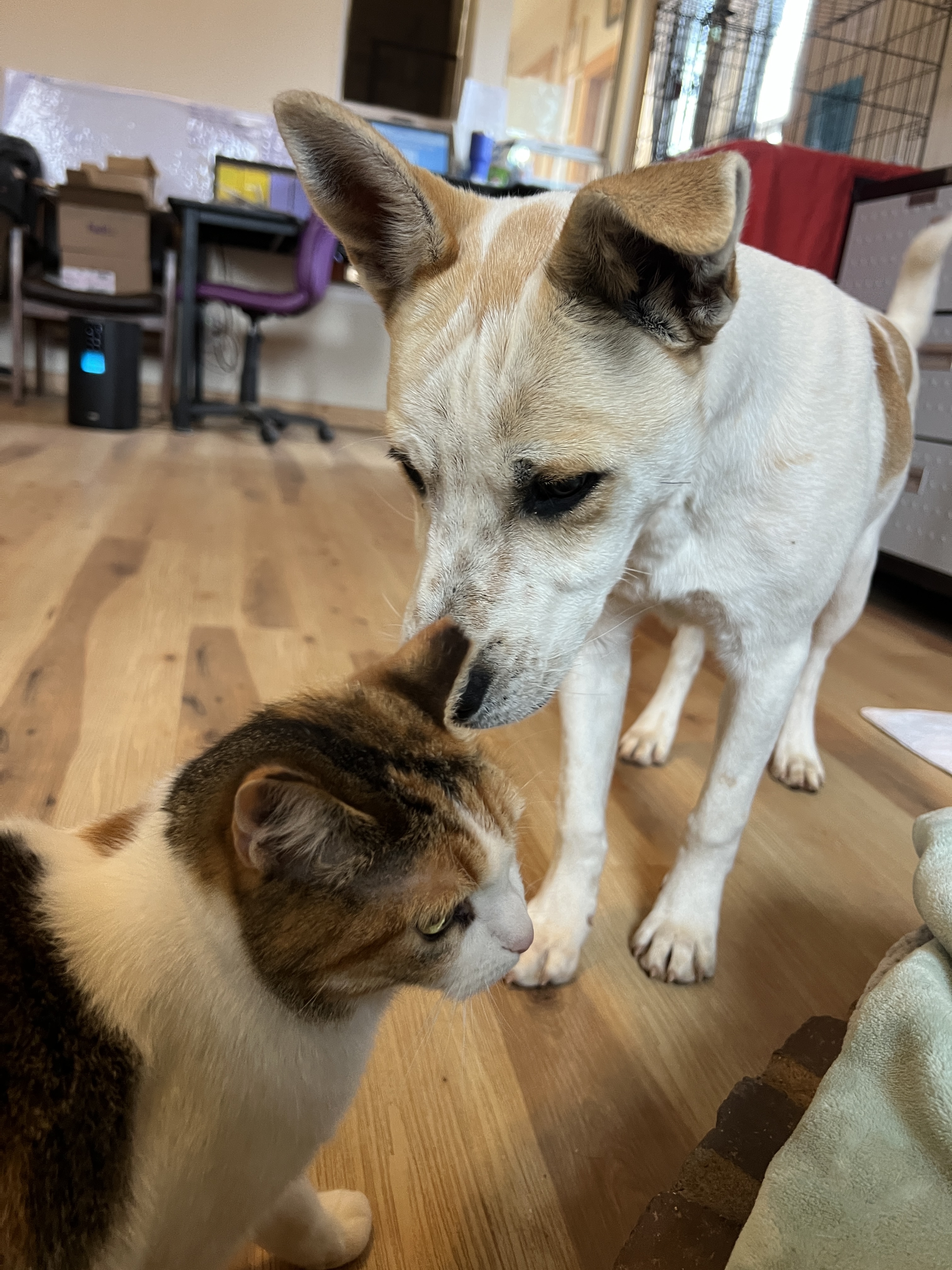
Step 2: Start With Scent Swapping
Before allowing the animals to see each other, give them a chance to become familiar with each other's scent.
You can do this by:
- Swapping blankets or bedding between the dog and cat.
- Allowing your dog to investigate areas where your cat spends time while the cat is elsewhere.
Pair these experiences with treats, meals, or other positive activities. You want both animals to begin associating the other one's scent with good things.
Step 3: Let Them See Each Other From a Distance
Once both animals seem comfortable with each other's scent, allow them to see one another through a secure barrier.
A sturdy baby gate, screen door, or other secure barrier can work well. Make sure your dog cannot jump over, push through, or knock it down (Having the dog on a leash will help with this).
Keep your dog at a comfortable distance and reward them for calm behavior. Your cat should have the freedom to observe, hide, or walk away.
Keep these sessions short and positive. If either animal becomes stressed, give them a break.
Step 4: Introduce Your Dog on a Leash
When both animals are comfortable seeing each other through a barrier, you can begin short, supervised introductions in the same room.
Keep your dog on a regular leash and make sure your cat has access to elevated spaces and an easy escape route.
Reward your dog for:
- Looking at the cat and then looking away (Engage/Disengage)
- Responding to their name.
- Relaxing in the cat's presence.
- Choosing to disengage rather than follow the cat.
Do not allow your dog to chase, corner, or repeatedly approach the cat. Even if your dog seems playful, chasing can be frightening and dangerous for a cat.
Never force your cat to approach the dog. Let them decide how close they feel comfortable getting.
Step 5: Watch Their Body Language
Pay close attention to what both animals are communicating.
Signs your cat may be uncomfortable include:
- Flattened ears
- A puffed-up or flicking tail
- Hissing or growling
- Hiding or avoiding the dog
- Swatting
Signs your dog may be too focused on the cat include:
- Intense staring or fixation
- Stiff body posture
- Lunging or barking
- Whining or trembling with excitement
- Ignoring familiar cues
- Attempting to chase
If either animal becomes uncomfortable, calmly increase the distance and end the session if needed.
Do not punish hissing or growling. These are forms of communication that tell us an animal needs more space.
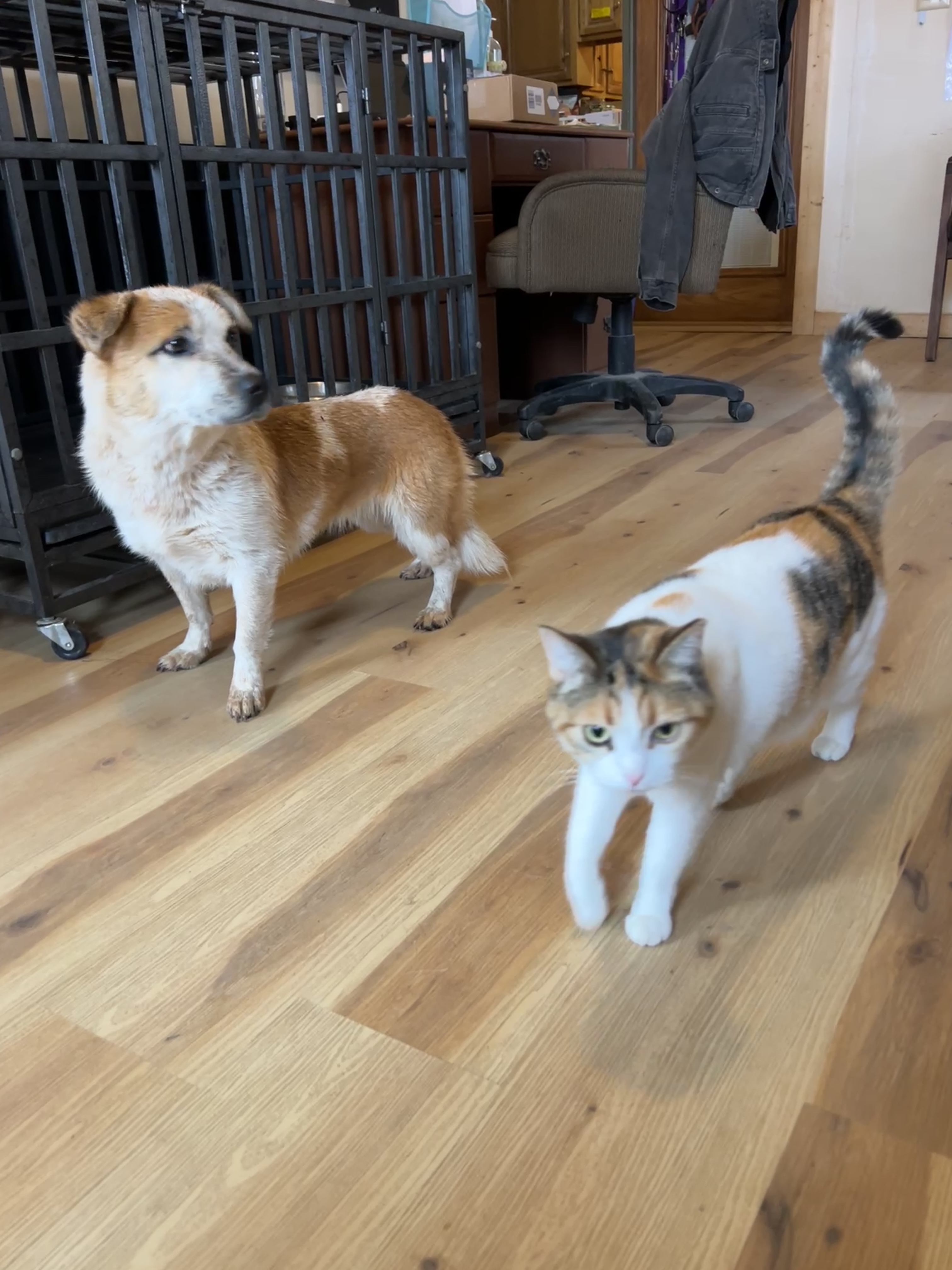
Step 6: Gradually Increase Time Together
As both animals become more comfortable, slowly increase the length of their supervised interactions.
Continue rewarding your dog for calm behavior and allowing your cat to move around freely without being followed.
Keep your cat's food, water, litter box, and favorite resting spots somewhere the dog cannot access. Your cat should never have to compete with the dog for their basic needs.
Step 7: Don't Rush Unsupervised Time
Even if things seem to be going well, do not leave your dog and cat alone together until you are confident they are safe around each other.
Some dogs may learn to comfortably coexist with cats but still have an instinct to chase when a cat runs. Others may never be safe around cats, regardless of how much time they spend together.
If your dog has a history of chasing, stalking, or harming small animals, seek professional guidance before attempting introductions. A leash and a baby gate are not substitutes for assessing predatory behavior.
A Few Things to Remember
- Always give your cat a way to escape.
- Never force interactions between your pets.
- Reward calm behavior and disengagement.
- Keep food, toys, and other valuable resources separate.
- Go back a step if either animal becomes uncomfortable.
- Never assume that a dog who ignores a cat while supervised will be safe alone with them.
Every dog and cat relationship is different. Some will eventually become cuddle buddies, while others will simply learn to share a home peacefully.
Take your time, celebrate the little victories, and remember that a slow introduction is always better than a rushed one!
Our certified training and behavior specialist is always happy to assist via video call
Bringing a new dog into your home is extremely exciting but a good introduction is one of the most important steps in helping dogs build a positive relationship with an already existing cat in the home.